
Maintenance and faults
Scheduled maintenance, fault workflow, QR verification on site, modernisation and installation projects.
Maintenance schedules, fault records, field teams, billing and official documents in one system. Records are entered from a phone the moment the work is done; a maintenance visit cannot be closed without scanning the QR code.
Scheduled maintenance, fault workflow, QR verification on site, modernisation and installation projects.
Live location, task assignment, territories. Jobs close with photos and a signature; without a network the record is queued on the device.
Automatic billing periods, customer balances, cheques, e-invoicing; notices, logbooks and municipal filings in one click.
Say “complete the maintenance, record a 200 lira payment” — more than 50 actions by speaking Turkish.
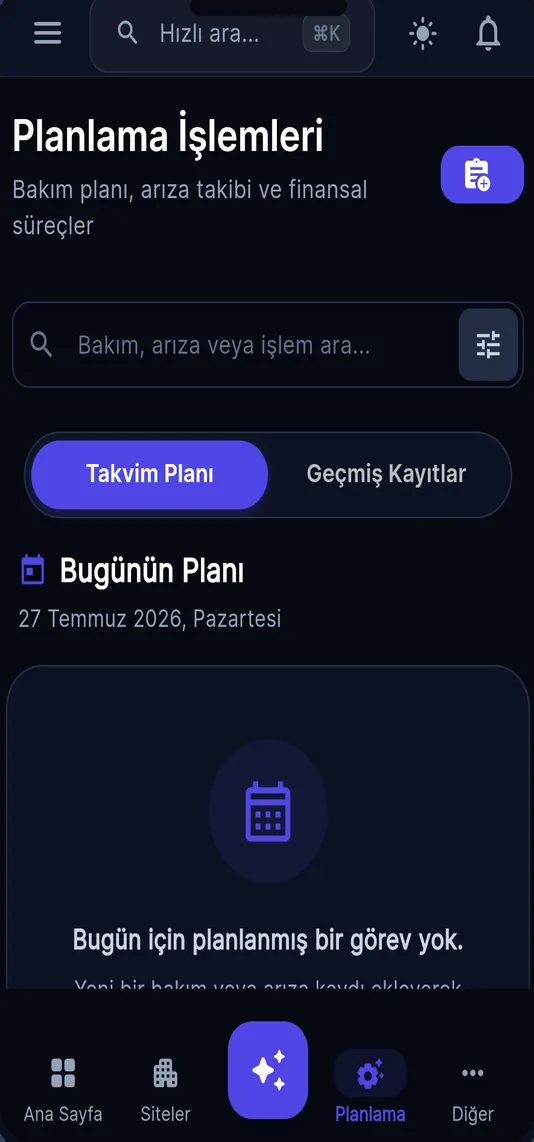
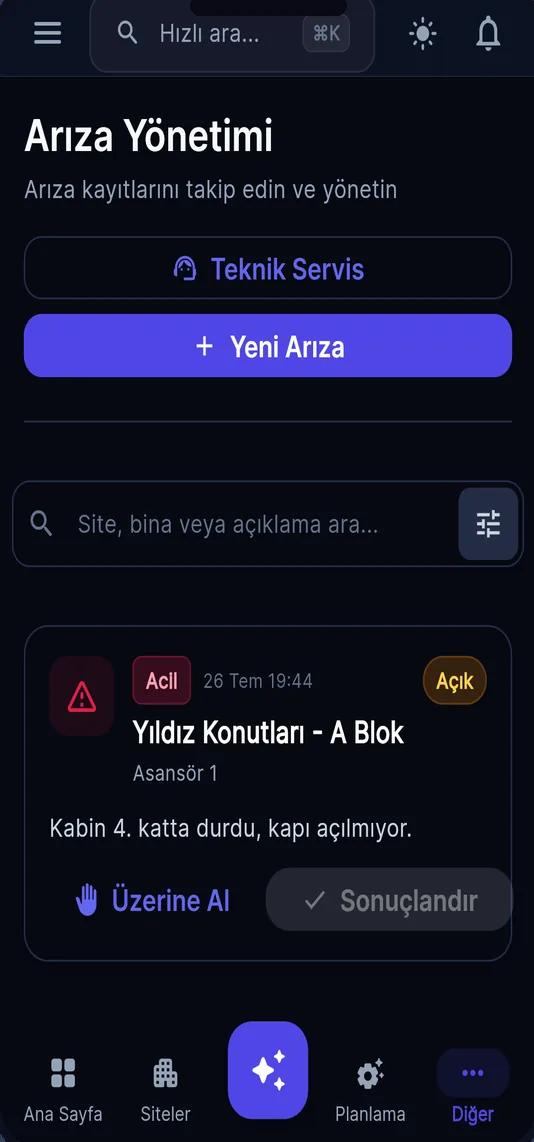
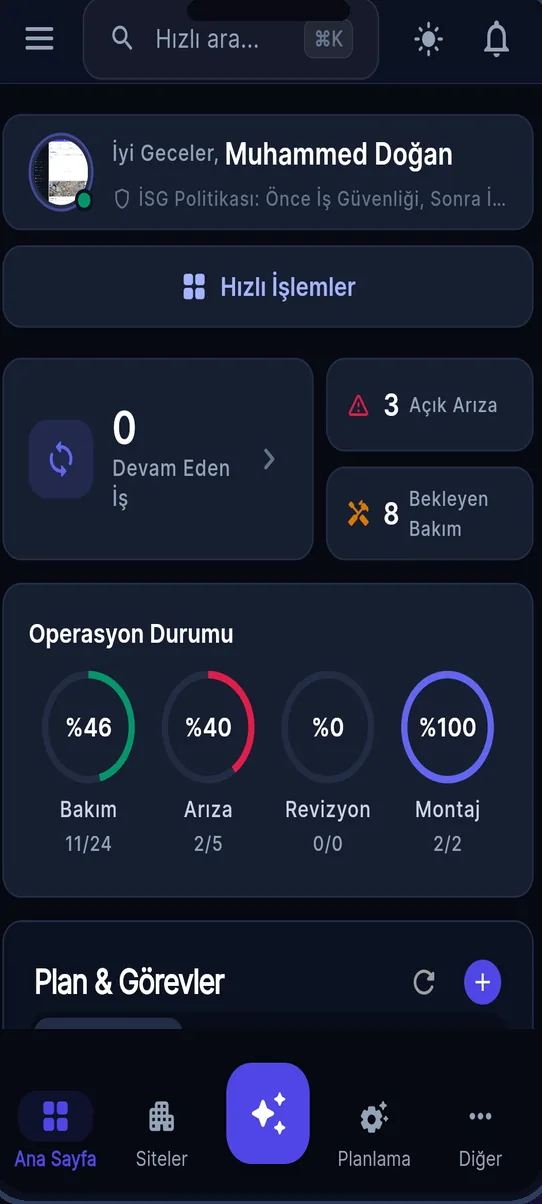
Real screens from the application. No mocked-up screenshots.
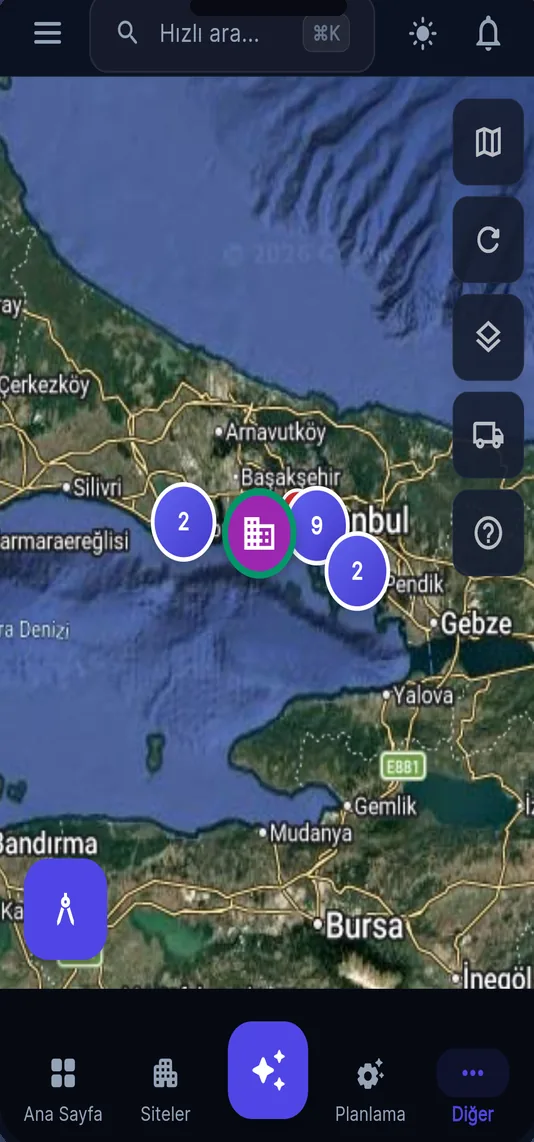
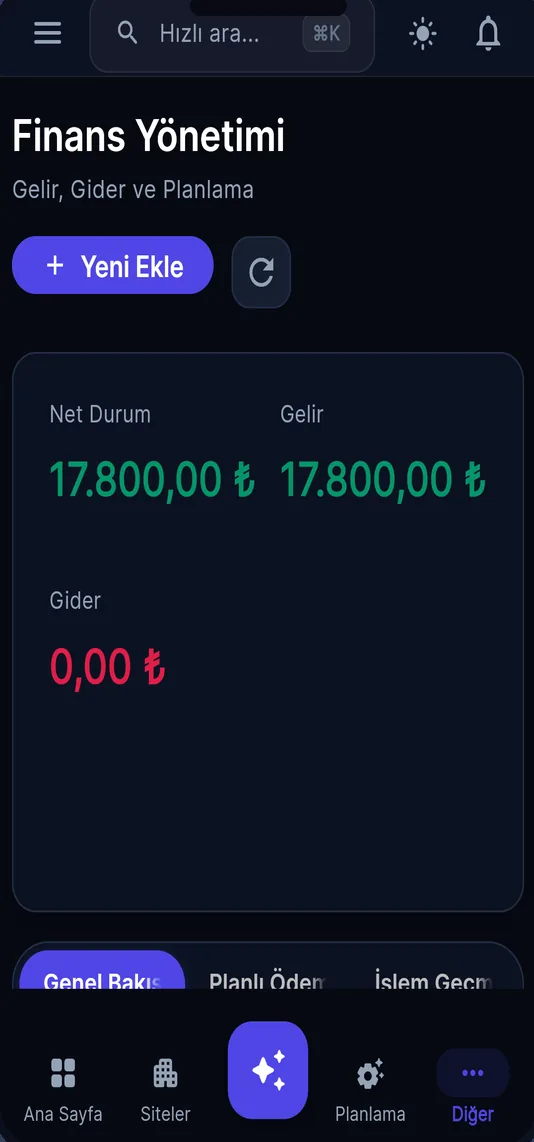
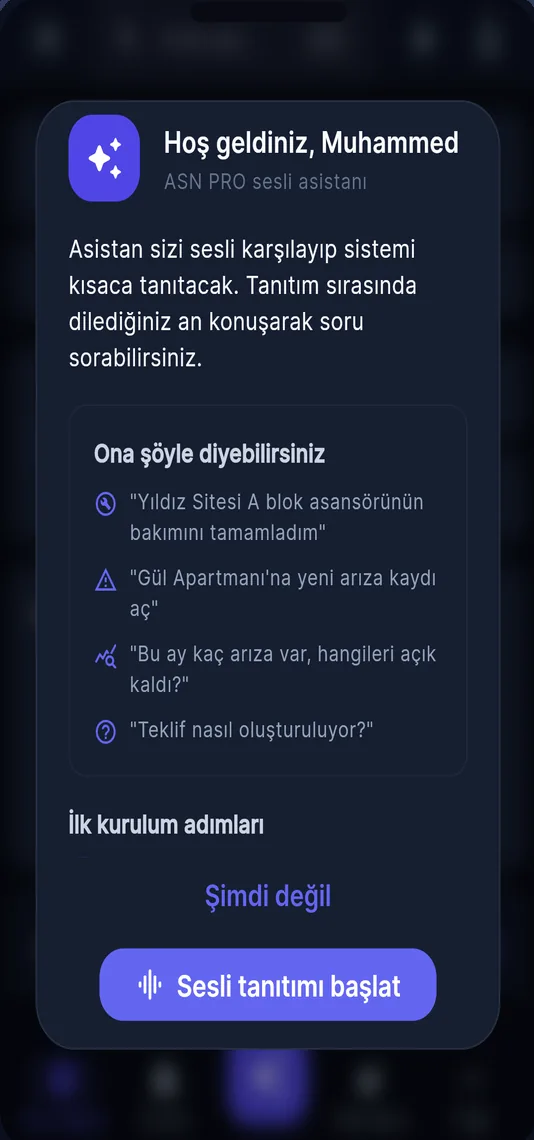
A maintenance record is worth very little if it can be typed from a car park. The requirement we started from was easy to state and awkward to build: a maintenance visit cannot be closed unless the technician scans the QR code fixed to that lift.
The scan is not a checkbox. Closing a job writes the location, the time, a digital signature and a photo into the same record, so a building owner asking whether anyone actually came gets an answer with four independent pieces of evidence behind it, and the office stops arbitrating between a technician’s word and a manager’s memory.
Everything downstream — billing periods, fault timers, material consumption — hangs off that closure event. That is why it had to be the hardest thing in the product to fake.
Machine rooms and pits are among the worst places in a building to hold a mobile connection, and they are exactly where the work is done. An application that needs the network at the moment of closure would fail in the field every day.
So the device is the source of truth until it can talk. Jobs queue locally when there is no signal and synchronise when there is, and the technician never has to decide whether it is safe to press the button. This shaped the data model more than any other requirement: a record has to carry enough context to be replayed later without the server filling in the blanks.
ASNPRO ships as 22 modules under a single licence with an unlimited number of users. That is a commercial decision with an engineering bill attached: a company that pays once for everything will actually use everything, so the modules cannot be loosely related applications sharing a login screen.
Material issued from stock on a job, the payroll cost of the technician who did it, the vehicle that took him there and the invoice that follows all describe one event. They are separate modules on screen and a single chain in the database.
Each company sits in its own schema. Isolating tenants at the schema level costs more in migration work than a shared table with a company column would, and it removes an entire class of bug where somebody forgets the filter.
Periodicity is set per item rather than per lift, because the parts of a lift are not on the same clock. A component checked monthly and one checked yearly belong to the same machine and to different schedules, and flattening them into one interval either over-services the cheap work or misses the expensive work.
Faults carry their own timer. A critical fault still open after four hours is flagged as SLA exceeded, and the flag is computed rather than remembered, so nobody has to notice that something is late for it to be treated as late.
Building managers read the same picture through a report link that needs no account. Forcing a customer to create a login before they can see their own maintenance history is the most reliable way to guarantee they never look at it.
Elevator maintenance in Turkey carries paperwork with fixed form: e-invoices through GİB, formal notices, the logbook, notification to the municipality. These are not free-text documents. They are correct or they are rejected.
Producing them from the operational record instead of retyping them into a separate program removed the most common source of error we saw, which was two systems disagreeing about what had happened. Incoming paper travels the other way: receipts and invoices are read by OCR rather than keyed in twice.
Stock is multi-warehouse, and material used on site is deducted at the moment the job is closed rather than during a monthly count. The count then measures reality instead of creating it.
Payroll covers advances and personnel cost including social security, so the cost of a job includes the person who did it. Vehicles are assigned by QR and followed with GPS and geofences.
None of this is impressive in isolation. It matters because the numbers reconcile: the same closure that deducted a part also recorded the hour that priced the labour.
ASNPRO is live on iOS, Android and the web, with more than 990 lifts and over 1,700 maintenance records tracked through it. More than 50 operations can be driven by Turkish voice command, which reads as a novelty until you have tried to type on a phone with one hand while holding a torch in the other.
We wrote the product and we still run it. If you came looking for the product rather than the engineering behind it, it has its own site at asnpro.net.
No. The QR code fixed to the lift has to be scanned, and closing the job writes the location, the time, a digital signature and a photo into the record.
The job is queued on the device and synchronises when the connection returns. The technician closes it normally; the queue is not something they have to manage.
One licence covers 22 modules and an unlimited number of users, so adding a technician does not change what you pay.
No. They open a report link. Nothing is installed and no login is created for them.
Each company has its own database schema, so isolation is enforced at the storage level rather than by a filter somebody has to remember to write.
Yes. E-invoicing through GİB, formal notices, the logbook and municipal notification are generated from the operational record instead of being retyped in a separate program, and incoming receipts and invoices are read by OCR.
A short call is enough. We run demos for our products and a free discovery call for services.
If you would rather not fill in a form, call us or write on WhatsApp.
bilgi@mnethic.comPalandöken, Erzurum